Manual Retractable Awning Problems: A Comprehensive Guide
Discover solutions for common issues with manual retractable awnings, ensuring lasting shade and enjoyment; this guide details selection and troubleshooting techniques.
Manual retractable awnings offer a fantastic way to enhance outdoor living spaces, providing shade and shelter with convenient operation. However, like any mechanical system exposed to the elements, they are prone to various issues over time. Understanding these potential problems is crucial for maintaining your awning’s functionality and extending its lifespan.
Common difficulties range from simple operational snags – like difficulty extending or retracting the awning – to more complex mechanical failures affecting the handle, gears, or arms. Environmental factors, such as strong winds and prolonged exposure to moisture, significantly contribute to wear and tear. Addressing these issues promptly prevents minor inconveniences from escalating into costly repairs or replacements. This guide aims to equip homeowners with the knowledge to diagnose and resolve typical manual awning problems effectively.
Common Causes of Manual Awning Malfunctions
Several factors contribute to the malfunctions experienced with manual retractable awnings. A primary cause is often accumulated dirt and debris within the gear system, hindering smooth operation. Weather exposure plays a significant role; prolonged sun exposure degrades fabric and plastic components, while moisture leads to rust and corrosion of metal parts.
Mechanical stress from frequent use, particularly forceful extension or retraction, can strain the handle mechanism and arm locks. Loss of spring tension, essential for assisted operation, is another frequent issue. Improper storage during harsh weather, like leaving the awning extended in strong winds, dramatically increases the risk of damage. Finally, neglecting regular maintenance, including cleaning and lubrication, accelerates wear and tear, ultimately leading to operational problems.
Mechanical Problems & Solutions
Address mechanical failures promptly with careful inspection, lubrication, and component replacement; restoring smooth function is achievable with focused effort.
Awning Fabric Sticking or Bunching
Fabric sticking or bunching during operation is a frequent issue with manual awnings, often stemming from uneven rolling or debris accumulation within the awning’s track system. Initially, thoroughly inspect the fabric’s edges for tears or obstructions, carefully removing any twigs, leaves, or insect nests. Next, gently attempt to redistribute the fabric while slowly extending or retracting the awning, avoiding forceful pulling which could cause further damage.
Lubrication of the awning’s roller mechanism and tracks with a silicone-based spray can significantly reduce friction. Ensure the lubricant is applied evenly and doesn’t attract dirt. If the problem persists, examine the awning arms for proper alignment; misaligned arms can create uneven tension, leading to bunching. In severe cases, professional cleaning or fabric replacement might be necessary to restore smooth functionality and prevent long-term damage.
Handle Mechanism Failure
A malfunctioning handle is a common frustration with manual retractable awnings, often resulting from a stripped gear, broken connecting rod, or a loose handle attachment. Begin by inspecting the handle itself for any visible damage, such as cracks or bending. Next, examine the point where the handle connects to the awning’s gear system, ensuring it’s securely fastened.
If the handle spins freely without engaging the awning, the internal gear system is likely the culprit. Accessing and replacing these gears often requires disassembly of the awning’s end cap. Lubricating the gears can sometimes provide a temporary fix, but replacement is usually necessary for a lasting solution. If you’re uncomfortable with mechanical repairs, consulting a professional awning technician is highly recommended to avoid further complications.
Arm Lock Issues & Repair
The arm locks on a manual retractable awning are crucial for maintaining its extended position, preventing unwanted retraction due to gravity or slight inclines. When these locks fail, the awning may slowly descend or feel unstable. Inspect each arm lock mechanism for visible damage, such as broken levers or worn-out locking teeth.

Often, a simple adjustment is all that’s needed; tighten any loose screws or bolts associated with the locking mechanism. If the locks are consistently slipping, the internal springs may have lost tension, requiring replacement. Carefully disassemble the arm lock housing, noting the spring placement for reassembly. Lubricating the moving parts can also improve functionality. If repairs prove difficult, consider replacing the entire arm assembly for optimal safety and performance.
Gear System Problems – Identifying and Fixing
Manual retractable awnings rely on a gear system to convert handle rotation into awning extension or retraction. Identifying gear problems involves listening for grinding noises during operation, or noticing excessive resistance when turning the handle. Inspect the gears for cracked, stripped, or broken teeth – these are common failure points.
Fixing gear issues often requires disassembly of the awning’s roller mechanism. Carefully clean the gears, removing any debris or old lubricant. Apply a silicone-based lubricant to ensure smooth operation. If teeth are damaged, gear replacement is necessary; ensure you obtain the correct replacement parts. Reassemble carefully, verifying proper alignment before testing; Persistent issues may indicate a more significant problem within the roller assembly.
Spring Tension Loss – Causes and Adjustments
A loss of spring tension is a frequent issue in manual retractable awnings, making extension and retraction difficult. Causes include prolonged use, exposure to weather, and natural spring fatigue over time. Reduced tension results in a slack fabric and requires more effort to operate the awning.
Adjustments typically involve tightening the spring mechanism. Most awnings have adjustment bolts or screws near the roller tube. Carefully tighten these in small increments, testing the awning’s operation after each adjustment. Caution: over-tightening can damage the spring or awning components. If adjustments fail to restore adequate tension, the spring may need replacement by a qualified professional, ensuring safe and effective operation.

Fabric & Housing Related Issues
Explore common fabric and housing problems affecting manual awnings, including tears, mildew, corrosion, and drainage issues, impacting longevity and performance.
Torn or Damaged Awning Fabric
Awning fabric tears and damage are frequent occurrences, often stemming from strong winds, prolonged sun exposure, or general wear and tear. Small tears can often be repaired with specialized awning fabric tape or patching kits, readily available at home improvement stores. However, larger rips or extensive damage may necessitate professional repair or complete fabric replacement.
Regular inspection of the fabric is crucial for early detection of potential problems. Look for fraying seams, small punctures, or areas where the fabric is thinning. Addressing these issues promptly can prevent them from escalating into more significant and costly repairs. Consider the fabric type; acrylic fabrics are generally more durable and resistant to fading than polyester options, but both are susceptible to damage.
Preventative measures include retracting the awning during severe weather and applying fabric protectant sprays to enhance its resistance to UV rays and water damage. Ignoring fabric damage can lead to further deterioration and compromise the awning’s ability to provide adequate shade and protection.
Mold and Mildew Growth on Fabric
Mold and mildew thrive in damp environments, making awning fabric particularly vulnerable, especially if not fully dried after rain or exposure to humidity. This growth not only causes unsightly staining but can also weaken the fabric fibers, leading to premature deterioration and unpleasant odors. Identifying early signs, like dark spots or a musty smell, is crucial for effective treatment.
Cleaning solutions specifically designed for awning fabric are recommended. Avoid harsh chemicals like bleach, as they can damage the material. A mild soap and water solution, followed by thorough rinsing and complete drying, is often sufficient for minor growth. For more stubborn cases, specialized mildew removers may be necessary.
Prevention is key; ensure proper ventilation when the awning is retracted, allowing moisture to escape. Regularly cleaning the fabric and applying a mildew-resistant protectant spray can significantly reduce the risk of growth and prolong the awning’s lifespan.
Water Pooling and Drainage Problems
Water pooling on a retractable awning fabric is a common issue, often stemming from insufficient pitch or blocked drainage channels. This accumulated water adds significant weight, potentially stressing the awning’s frame and leading to sagging or even structural damage. Prolonged pooling also encourages mold and mildew growth, further compromising the fabric.
Proper installation with a slight downward slope is essential for effective water runoff. Regularly inspect the awning’s arms and frame for any obstructions, such as leaves or debris, that might be hindering drainage. Ensuring the fabric is taut and free of wrinkles also helps prevent water from collecting.
Addressing existing pooling requires immediate action; gently brush away the water with a soft broom or squeegee. If the problem persists, consider adjusting the awning’s pitch or consulting a professional to assess the drainage system.
Awning Housing Corrosion
Corrosion within the awning housing is a significant concern, particularly in coastal environments or areas with harsh winters. Exposure to moisture, salt air, and de-icing agents can degrade metal components, leading to rust and weakening of the housing’s structural integrity. This compromises the awning’s functionality and potentially causes operational issues.
Regular inspection of the housing for signs of rust or corrosion is crucial. Early detection allows for preventative measures, such as cleaning and applying rust-resistant coatings. Aluminum housings are generally more resistant to corrosion than steel, offering a longer lifespan.
Severe corrosion may necessitate professional repair or even housing replacement. Ignoring this issue can lead to complete awning failure and costly damage. Protective covers during off-season storage can significantly mitigate corrosion risks.
Rust on Metal Components
Rust formation on metal components – including arms, gears, and support structures – is a frequent issue with manual retractable awnings. This occurs due to prolonged exposure to moisture, humidity, and atmospheric elements. Rust weakens these parts, hindering smooth operation and potentially leading to breakage.
Identifying rust early is vital. Look for reddish-brown discoloration or flaking on metal surfaces. Regular cleaning with a wire brush to remove surface rust, followed by a rust-inhibiting primer and paint, can prevent further deterioration. Lubricating moving parts also helps.
Severe rust compromises structural integrity and requires professional attention. Replacement of heavily corroded components is often necessary to ensure safety and functionality. Protective coatings and proper storage during inclement weather are preventative measures.
Operational Difficulties
Encountering issues like hard extension/retraction, sagging, or awnings that won’t stay put are common; proper diagnosis and repair are essential for usability.
Difficulty Extending the Awning
Struggling to extend your manual retractable awning can stem from several sources, often related to mechanical resistance within the system. A primary culprit is often increased friction along the awning’s arms or within the roller mechanism itself. This friction could be due to a lack of lubrication, accumulated dirt and debris, or even slight bending of the metal components.
Before attempting any repairs, carefully inspect the awning arms for any obstructions or signs of damage. Ensure the area around the awning is clear, and that nothing is physically hindering its movement. Try gently assisting the extension process while operating the handle; if significant force is required, avoid pushing it further, as this could cause damage.
Check the spring tension – a weakening spring can reduce the assisting force needed for extension. Finally, examine the gear system for any visible issues, like stripped gears or misalignment. Addressing these points will often restore smooth operation.
Difficulty Retracting the Awning
Encountering resistance when retracting a manual awning is a common issue, frequently linked to spring tension or mechanical binding. A weakening spring provides less force to assist in the retraction process, making it harder to wind the awning back into its housing. Inspect the spring mechanism for signs of fatigue or damage; adjustments or replacement may be necessary.
Another frequent cause is friction within the roller tube or along the awning arms. Accumulated dirt, debris, or even slight corrosion can significantly increase resistance. Thoroughly clean and lubricate all moving parts, paying close attention to the roller mechanism and pivot points.
Ensure nothing is obstructing the awning’s path during retraction. If the fabric is unevenly wound, it can create significant drag. Gently guide the fabric as you retract it, ensuring even distribution. Avoid forcing the retraction, as this could damage the gears or spring.
Awning Not Staying Extended
A manual retractable awning that fails to remain extended often points to issues with the locking mechanism on the support arms. These arms typically feature a locking component designed to secure the awning at the desired extension level. Inspect these locks for damage, wear, or misalignment; they may not be engaging properly.
Insufficient spring tension can also contribute to this problem. If the spring isn’t strong enough, it may not provide adequate counterforce to hold the awning in place against gravity or slight breezes. Adjusting or replacing the spring might be required to restore proper functionality.
Furthermore, check for any slippage within the gear system. Worn gears can prevent the awning from holding its position. Ensure all connections are secure and consider professional repair if gear damage is evident.
Awning Drooping or Sagging
An awning exhibiting a noticeable droop or sag usually indicates a problem with the structural support, most commonly the awning arms. Examine the arms for bends, cracks, or signs of corrosion, as these weaken their ability to bear the awning’s weight. Ensure the arms are securely fastened to both the awning housing and the mounting surface.
Loss of fabric tension is another frequent cause. Over time, the fabric can stretch or become loose, leading to a sagging appearance. Tightening the fabric, if possible, or considering a fabric replacement may be necessary.
Inspect the pitch adjustment settings; improper angling can exacerbate sagging. Finally, confirm the mounting brackets are firmly attached to the wall and capable of supporting the awning’s weight.

Environmental Factors & Maintenance
Protect your investment with proactive care; weather impacts components, and regular cleaning and upkeep are vital for preventing future manual awning problems.
Wind Damage and Prevention
Wind poses a significant threat to manual retractable awnings, potentially causing extensive damage to the fabric, arms, and overall structure. Strong gusts can lead to tearing, stretching, or complete detachment of the awning, resulting in costly repairs or replacements. Prevention is key; always retract your awning when anticipating high winds or inclement weather.
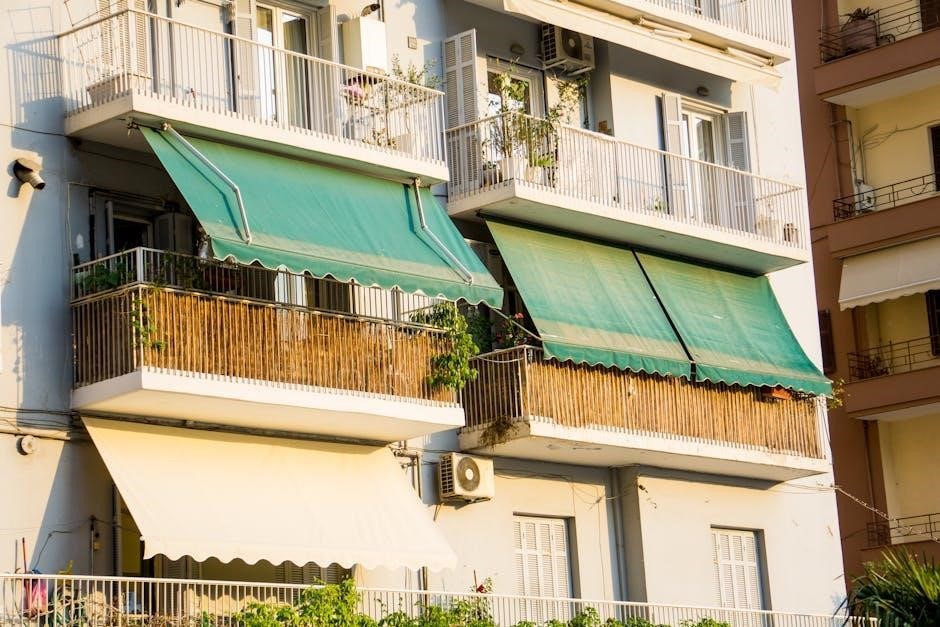
Consider installing a wind sensor that automatically retracts the awning when wind speeds exceed a safe threshold, offering an added layer of protection. Regularly inspect the awning’s mounting brackets and ensure they are securely fastened to the wall or supporting structure. Reinforcing these connections can significantly improve wind resistance. Furthermore, choosing a fabric designed to withstand higher wind loads can mitigate potential damage. Remember, proactive measures are far more effective – and economical – than reactive repairs.

Impact of Weather on Awning Components
Exposure to the elements significantly impacts manual retractable awning components over time. Prolonged sun exposure can fade and weaken the awning fabric, reducing its lifespan and protective qualities. Rain and humidity contribute to mold and mildew growth, while freeze-thaw cycles can damage metal parts.
Metal components, like arms and gears, are susceptible to rust and corrosion, hindering smooth operation. The housing can also degrade due to constant weather exposure. Regularly inspect all parts for signs of wear, corrosion, or damage. Protective coatings and treatments can help mitigate these effects, extending the awning’s life. Proper cleaning and maintenance, including regular fabric protection applications, are crucial for preserving the awning’s functionality and appearance against harsh weather conditions.
Regular Maintenance to Prevent Problems
Proactive maintenance is key to avoiding costly repairs and extending the life of your manual retractable awning. Regularly inspect the fabric for tears, fraying, or mildew, addressing issues promptly. Clean the fabric with mild soap and water, avoiding harsh chemicals that can cause damage.
Lubricate moving parts – the handle mechanism, arms, and gears – with a silicone-based lubricant to ensure smooth operation. Check the spring tension periodically and adjust as needed. Inspect the housing and metal components for signs of rust or corrosion, applying protective coatings. Finally, ensure proper drainage to prevent water pooling. Consistent upkeep will minimize malfunctions and maximize your awning’s performance for years to come.
Proper Cleaning Procedures
Maintaining a clean awning is crucial for its longevity and appearance. Begin by gently brushing off loose dirt and debris with a soft-bristled brush. Prepare a cleaning solution of mild soap – like dish soap – and lukewarm water. Avoid using abrasive cleaners or bleach, as these can damage the fabric.
Apply the solution with a sponge or soft cloth, working in gentle circular motions. Rinse thoroughly with clean water, ensuring no soap residue remains. Allow the awning to air dry completely before retracting it. For stubborn stains, consult a professional awning cleaner. Regular cleaning prevents mildew growth and keeps your awning looking its best, safeguarding against more significant problems.
Safety Considerations & When to Call a Professional
Assess repair complexity and potential hazards; for significant mechanical issues or electrical concerns, prioritize safety and consult a qualified awning technician.
DIY Repair Limitations
While many manual retractable awning problems seem straightforward, attempting complex repairs without the proper knowledge and tools can exacerbate the issue and create safety hazards. Disassembling intricate mechanisms like gear systems or spring assemblies requires specialized expertise to ensure correct reassembly and functionality. Incorrectly handled springs, for example, can cause serious injury.
Furthermore, diagnosing underlying causes of malfunctions often necessitates a deeper understanding of awning construction than a typical homeowner possesses. Electrical components, even in manual systems with motor assists, should only be addressed by qualified professionals. Ignoring these limitations can lead to costly mistakes, void warranties, and potentially compromise the structural integrity of the awning and your property. Knowing when to seek professional help is crucial for a safe and effective resolution.
Potential Hazards During Repair
Attempting to repair a manual retractable awning presents several potential dangers. The most significant risk stems from the stored energy within the spring mechanism; sudden release can cause severe injury. Working at heights also introduces fall hazards, necessitating stable ladders and appropriate safety gear. Metal components can have sharp edges, leading to cuts and abrasions.
Additionally, older awnings may contain asbestos in certain parts, requiring careful handling and professional abatement if disturbed. Electrical shock is a concern if dealing with motorized models, even during seemingly simple repairs. Always disconnect power sources. Ignoring these hazards can result in serious physical harm. Prioritize safety by wearing protective equipment and understanding the risks before commencing any repair work.