
Bolt and nut size charts are essential guides detailing dimensions for fasteners, often available as a PDF. These charts correlate metric and imperial sizes, aiding in precise component assembly.
Utilizing the correct fastener dimensions is paramount for structural integrity, preventing failures and ensuring safe operation of machinery and vehicles, like the Chevrolet Bolt.
Key bolt and nut terminology includes diameter, thread pitch, and drive type; understanding these terms is crucial when referencing any bolt size chart PDF document;
What are Bolt and Nut Size Charts?
Bolt and nut size charts, frequently distributed as PDF documents, are comprehensive reference tools detailing the standardized dimensions of fasteners. These charts meticulously outline bolt diameters, thread pitches (coarse or fine), lengths, and corresponding nut sizes, ensuring compatibility and proper assembly. They bridge the gap between metric (M3, M6, M8, M12) and imperial/SAE (1/4″, 5/16″, 3/8″) systems, crucial for diverse applications.
A typical chart will list bolt sizes alongside their equivalent nut sizes, often including torque specifications. These resources are invaluable for mechanics, engineers, and DIY enthusiasts working on projects ranging from automotive repairs – like those encountered with a Chevrolet Bolt – to general construction. Finding a reliable bolt size chart PDF is the first step towards a successful and secure fastening process, preventing mismatched components and potential structural weaknesses.
Importance of Using Correct Sizes
Employing the correct bolt and nut sizes, as detailed in a reliable bolt size chart PDF, is absolutely critical for safety and functionality. Incorrect sizing can lead to several detrimental consequences, including stripped threads, weakened joints, and ultimately, component failure. This is particularly vital in automotive applications, such as maintaining the Chevrolet Bolt’s charging system or securing jack points.
Using an undersized fastener compromises the clamping force, while an oversized one can damage the threaded components. Referencing a PDF chart ensures proper torque application, preventing over-tightening or loosening. Accurate sizing also guarantees compatibility with existing hardware, streamlining repairs and modifications. Ignoring these guidelines can result in costly repairs, potential accidents, and diminished performance, highlighting the necessity of precise fastener selection.
Understanding Bolt and Nut Terminology
Successfully navigating a bolt and nut size chart PDF requires understanding key terminology. “Diameter” refers to the bolt’s width, often expressed in millimeters (metric) or inches (imperial). “Thread pitch” defines the distance between threads, crucial for compatibility. “Drive type” – like hex, Torx, or Phillips – dictates the tool needed for installation.
When consulting charts, note “bolt grade” indicating strength (e.g., Grade 8). Nut grades also signify strength and are often marked accordingly. Familiarize yourself with AS1110/1, ISO 4014, and ANSIB18.2.1 standards referenced in some PDF guides. Understanding these terms ensures you select fasteners that meet the required load-bearing capacity for applications like securing fluid fill points on a Chevrolet Bolt, preventing failures and ensuring safety.

Bolt Size Charts: Metric System
Metric bolt size charts, often found as a PDF, detail dimensions like M3, M6, and M12, alongside corresponding nut sizes for precise assembly;
M3, M4, M5 Bolt Sizes and Nut Equivalents
M3 bolts typically utilize a 6mm nut, featuring a 0.5mm pitch, commonly found in electronics and lightweight assemblies; detailed bolt size chart PDFs illustrate these pairings.
M4 bolts, with a 0.7mm pitch, generally pair with 8mm nuts, offering increased strength for slightly heavier applications, as shown in comprehensive fastener guides available in PDF format.
M5 bolts, employing a 0.8mm pitch, commonly use a 10mm nut, providing a robust fastening solution for various automotive and mechanical components; consult a bolt and nut size chart PDF.
These smaller metric sizes are crucial for precise work, and accurate referencing of a PDF chart ensures compatibility and prevents stripping or damage during assembly. Always verify specifications!
M6, M8, M10 Bolt Sizes and Nut Equivalents
M6 bolts, featuring a 1.0mm pitch, commonly pair with 10mm nuts, frequently used in automotive applications and general machinery; a detailed bolt size chart PDF confirms these dimensions.
M8 bolts, with a 1.25mm pitch, typically utilize a 13mm nut, offering increased clamping force for more demanding applications, as illustrated in readily available fastener PDF guides.
M10 bolts, employing a 1.5mm pitch, generally match with 16mm nuts, providing substantial strength for critical assemblies, often found in vehicle chassis and engine components; refer to a PDF chart.
These mid-range metric sizes are vital for many repairs and modifications. Utilizing a reliable bolt and nut size chart PDF ensures correct component selection and prevents potential assembly issues.
M12, M14, M16 Bolt Sizes and Nut Equivalents
M12 bolts, with a 1.75mm pitch, commonly use 18mm nuts, providing robust fastening for heavier-duty applications; a comprehensive bolt size chart PDF details these specifications.
M14 bolts, featuring a 2.0mm pitch, typically pair with 21mm nuts, offering increased strength for critical structural connections, as shown in standard fastener PDF documentation.
M16 bolts, employing a 2.0mm pitch, generally match with 24mm nuts, delivering substantial clamping force for high-stress assemblies, often found in automotive chassis and industrial machinery; consult a PDF.
These larger metric sizes are essential for demanding applications. A precise bolt and nut size chart PDF is crucial for ensuring correct component selection and preventing assembly failures.

Bolt Size Charts: Imperial/SAE System
Imperial/SAE bolt size charts, often found as a PDF, detail standard sizes like 1/4″, 3/8″, and 1/2″ with corresponding nut dimensions for various applications.
1/4″, 5/16″, 3/8″ Bolt Sizes and Nut Equivalents
Common Imperial Bolt Sizes: Understanding the relationships between 1/4″, 5/16″, and 3/8″ bolts and their corresponding nut sizes is vital for many repairs, particularly in automotive applications like the Chevrolet Bolt. A typical bolt size chart PDF will illustrate these pairings.
A 1/4″ bolt generally requires a 1/4″-20 nut, while a 5/16″ bolt commonly uses a 5/16″-18 nut. The 3/8″ bolt often pairs with a 3/8″-16 nut. These numbers represent the thread count per inch.
Spanner/Socket Sizes: Referencing charts (like AS2465 ⸺ ANSIB18.2.1) shows a 1/4″ bolt needs a 7/16″ socket, 5/16″ a 1/2″ socket, and 3/8″ a 9/16″ socket. Accurate socket sizing prevents damage. Always consult a reliable bolt size chart PDF for precise specifications.
7/16″, 1/2″, 9/16″ Bolt Sizes and Nut Equivalents
Larger imperial bolt sizes, such as 7/16″, 1/2″, and 9/16″ inches, are frequently encountered in automotive and machinery applications, demanding accurate nut pairings. A comprehensive bolt size chart PDF is invaluable for these scenarios.
Typically, a 7/16″ bolt utilizes a 7/16″-14 nut, a 1/2″ bolt requires a 1/2″-13 nut, and a 9/16″ bolt commonly pairs with a 9/16″-18 nut. The “-14”, “-13”, and “-18” denote threads per inch.
Socket and Spanner Sizes: According to standard charts (AS1110/1 ⎯ ISO 4014), a 7/16″ bolt needs a 5/8″ socket, a 1/2″ bolt a 3/4″ socket, and a 9/16″ bolt a 1-7/16″ socket. Always verify with a detailed bolt size chart PDF to ensure correct tool selection and prevent fastener damage during assembly or disassembly.
5/8″, 3/4″, 7/8″ Bolt Sizes and Nut Equivalents
Heavier-duty applications often necessitate larger imperial bolt sizes like 5/8″, 3/4″, and 7/8″ inches, requiring precise nut matching. A reliable bolt size chart PDF becomes crucial for these robust assemblies.
Generally, a 5/8″ bolt corresponds to a 5/8″-11 nut, a 3/4″ bolt to a 3/4″-10 nut, and a 7/8″ bolt to a 7/8″-9 nut. The numerical value indicates the threads per inch, impacting tightening torque.
Socket and Spanner Sizes: Based on standard charts (AS2465 ⎯ ANSIB18.2.1), a 5/8″ bolt requires a 15/16″ socket, a 3/4″ bolt a 1″ socket, and a 7/8″ bolt a 1-1/8″ socket. Consulting a detailed bolt size chart PDF is vital for confirming these specifications and ensuring proper tool engagement, preventing rounding of the bolt head or nut.

Torque Specifications for Common Bolt Sizes
Torque specifications, often found within a comprehensive bolt size chart PDF, are critical for secure fastening, preventing loosening or damage to components.
Torque Chart for M6 ⸺ M12 Bolts
Precise torque values are vital for M6 through M12 bolts, frequently detailed in a bolt size chart PDF. These values depend heavily on the bolt’s material grade and the nut used. For example, an M6 bolt, utilizing a Grade 8.8 nut, typically requires between 9-12 Nm (Newton-meters) of torque.
Moving to M8 bolts, with the same Grade 8.8 nut, the recommended torque increases to approximately 22-26 Nm. An M10 bolt generally needs 44-50 Nm, while an M12 bolt, again with a Grade 8.8 nut, requires around 87-104 Nm. Always consult a reliable bolt size chart PDF for specific applications.
Stainless steel bolts often require lower torque values than steel bolts due to their different friction coefficients. Over-torquing can strip threads or damage the fastener, while under-torquing can lead to loosening and potential failure. Accurate torque application ensures joint integrity and safety.
Torque Chart for 1/4″ ⎯ 1/2″ Bolts
Torque specifications for 1/4″ to 1/2″ bolts are crucial, often found within a comprehensive bolt size chart PDF. These values are significantly impacted by bolt grade – Grade 2, 5, or 8 – and the nut’s material. A 1/4″ Grade 5 bolt typically requires 9-12 ft-lbs of torque.
Increasing to a 5/16″ Grade 5 bolt, the recommended torque rises to 19-24 ft-lbs. A 3/8″ Grade 5 bolt generally needs 32-40 ft-lbs, while a 1/2″ Grade 5 bolt requires approximately 58-72 ft-lbs. Referencing a detailed bolt size chart PDF is essential for accuracy.
Grade 8 bolts demand higher torque values. Always verify the correct torque using a calibrated torque wrench. Improper torque can lead to joint failure. Consistent application ensures reliable fastening and structural integrity.
Grade 8 Bolt Torque Specifications
Grade 8 bolts, known for their high tensile strength, necessitate precise torque application, detailed in a reliable bolt size chart PDF. A 1/4″ Grade 8 bolt typically requires 17-22 ft-lbs of torque, significantly higher than lower grades. For a 5/16″ Grade 8 bolt, the recommended torque ranges from 30-38 ft-lbs.
Moving to a 3/8″ Grade 8 bolt, torque specifications increase to 48-60 ft-lbs. A 7/16″ Grade 8 bolt generally needs 68-85 ft-lbs, while a 1/2″ Grade 8 bolt requires approximately 95-120 ft-lbs. Always consult a bolt size chart PDF for precise values.
Over-torquing can strip threads, while under-torquing can lead to loosening. Using a calibrated torque wrench is crucial. These specifications ensure optimal clamping force and joint reliability.

Bolt and Nut Materials & Strength
Bolt and nut materials, like steel and stainless steel, impact strength; a bolt size chart PDF details grade markings and properties for optimal selection.
Common Bolt Materials (Steel, Stainless Steel)
Steel bolts, particularly those adhering to grades like Grade 8, are frequently utilized due to their high tensile strength and affordability, making them suitable for many applications. A comprehensive bolt size chart PDF will often specify the grade alongside dimensions.
Stainless steel bolts offer superior corrosion resistance, crucial in environments exposed to moisture or chemicals. Different stainless steel alloys (like 304 or 316) provide varying levels of protection, detailed within material specifications found in a bolt size chart PDF.
Choosing the correct material depends on the application’s demands; a bolt size chart PDF doesn’t always detail material specifics, but it’s vital to consult separate material data sheets. Factors like temperature, load, and environmental conditions influence the optimal material selection, ensuring long-term reliability and preventing premature failure.
Nut Grades and Markings
Nut grades, similar to bolts, indicate strength and material properties. A bolt size chart PDF often references compatible nut grades for specific bolt sizes and applications. These grades are typically indicated by markings stamped onto the nut itself.
Common markings include numbers and symbols denoting tensile strength and material composition. For example, a Grade 8 nut will have distinct markings differentiating it from lower grades. Understanding these markings is crucial for ensuring proper fastener pairing, as detailed in a comprehensive bolt size chart PDF.
Incorrect nut grade selection can lead to joint failure. Always verify the markings match the required specifications, and consult a detailed bolt size chart PDF alongside material data sheets for accurate identification and compatibility. Proper nut selection is paramount for safety and structural integrity.

Resources for Finding Bolt and Nut Size Charts (PDF)
Numerous online databases and manufacturer websites offer downloadable bolt size chart PDF documents. These resources provide detailed specifications for various fasteners.
Online Bolt and Nut Size Chart Databases
Several websites compile extensive bolt and nut size charts in PDF format, offering convenient access to fastener specifications. These databases often categorize information by both metric and imperial (SAE) standards, simplifying the search process. Users can typically filter by bolt diameter, thread pitch, and material type to pinpoint the exact dimensions needed for their application.
Many of these online resources include torque specifications alongside dimensional data, crucial for proper assembly. Some databases also feature interactive tools allowing users to convert between different measurement systems. Finding a reliable bolt size chart PDF online can save significant time and effort compared to manually searching through manufacturer catalogs. Remember to verify the source’s credibility to ensure accuracy, especially when working on critical applications like automotive repairs, such as those found on a Chevrolet Bolt.
Manufacturer Specific Bolt Size Charts
Accessing bolt and nut size charts directly from manufacturers is often the most reliable method, particularly when dealing with specialized equipment or vehicles like the Chevrolet Bolt. These PDF documents detail the precise fasteners used in their products, ensuring compatibility and optimal performance. Manufacturer charts frequently include information beyond basic dimensions, such as material grades, coating specifications, and recommended torque values.
While these resources may require more searching to locate, they offer a level of accuracy unmatched by general databases. Websites dedicated to automotive repair often host links to manufacturer-specific charts. Always prioritize manufacturer documentation when available, as it reflects the intended design and safety parameters. Utilizing these bolt size chart PDF resources minimizes the risk of using incorrect fasteners, potentially preventing costly repairs or safety hazards.

Practical Applications & Considerations
Bolt and nut size charts (PDF) are vital for automotive work, like Chevrolet Bolt repairs, ensuring correct fastener selection for jack points and fluid fills.
Automotive Bolt Sizes (Chevrolet Bolt Specifics)
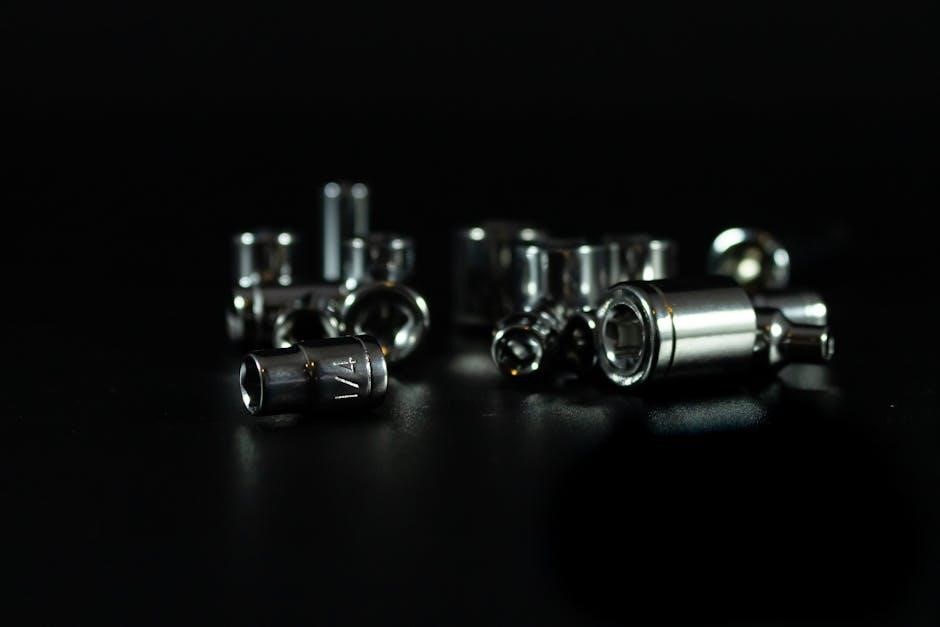
Chevrolet Bolt maintenance and modification frequently require referencing a bolt and nut size chart PDF. Specific sizes are crucial for tasks ranging from routine checks, like tire pressure and fluid level inspections (windshield washer, thermal loops), to more complex repairs.
Understanding the correct bolt diameters and corresponding nut sizes – often detailed in AS1110/1, ISO 4014, or ANSIB18.2.1 standards – is essential. For example, a 1/4″ bolt may require a 7/16″ nut. Accessing manufacturer-specific charts, or comprehensive PDF guides, ensures compatibility and prevents damage;
Modifications, such as installing lifts (QuickJack), necessitate knowing jack point specifications and appropriate fastener sizes. Correct torque specifications, found alongside size charts, are vital for safety and preventing component failure. Always consult reliable sources for accurate information.
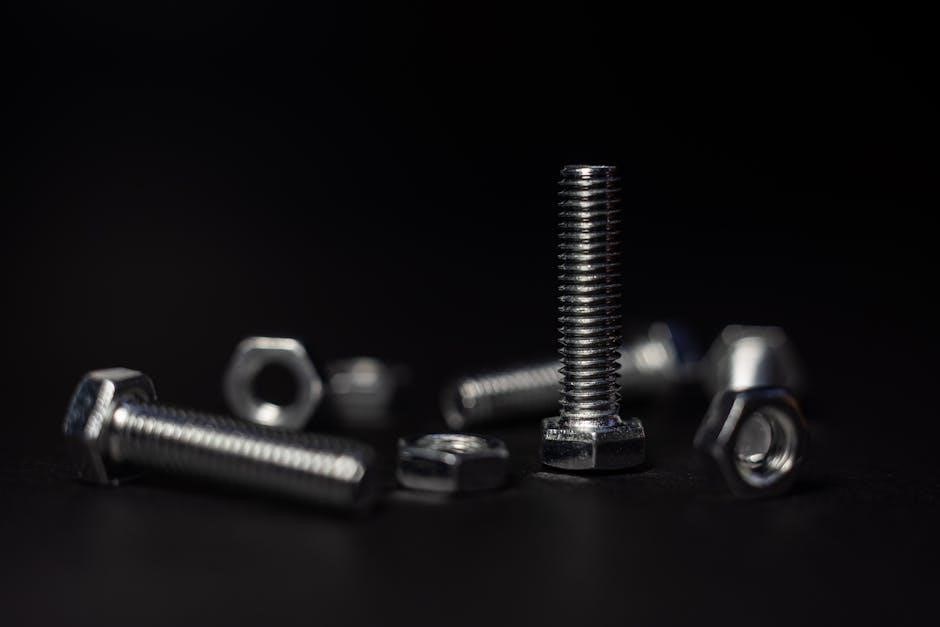
Jack Point Specifications for Chevrolet Bolt
When lifting a Chevrolet Bolt, precise jack point specifications are critical for safe vehicle elevation. Utilizing incorrect points can cause structural damage. A detailed bolt and nut size chart PDF, alongside vehicle-specific guides, can aid in identifying appropriate lifting locations.
The Bolt’s weight (approximately 3560 lbs) necessitates robust jacking points. Spacing – both fore and aft on each side – must be considered when using equipment like QuickJack lifts. Proper placement prevents chassis deformation and ensures stability during maintenance or repairs.
While specific bolt sizes aren’t directly related to jack point location, understanding fastener dimensions is crucial for any associated bracketry or reinforcement. Always consult the owner’s manual and reliable online resources for accurate jack point diagrams and recommended lifting procedures.
Fluid Fill Points and Bolt Sizes (Chevrolet Bolt)
The 2017 Chevrolet Bolt features three distinct thermal management loops: cabin heating, battery cooling, and power electronics. Accessing these systems requires knowledge of fluid fill point locations and associated fastener sizes. While a general bolt and nut size chart PDF provides common dimensions, specific Bolt details are essential.
Underhood access reveals these points, each potentially secured with varying bolt sizes. Identifying these fasteners – often metric – is crucial during fluid servicing. Correct bolt selection prevents stripping or damage to the housing.
Though a comprehensive chart isn’t readily available, referencing the owner’s manual and service documentation will reveal the necessary bolt sizes for each fill point cap or access panel. Proper torque specifications, found in related guides, are equally important.
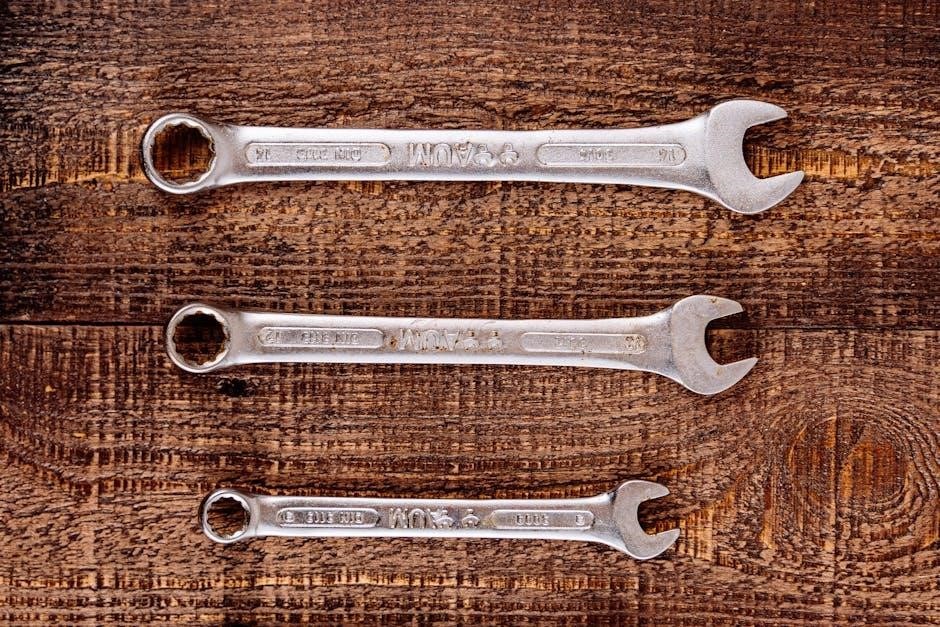
Troubleshooting Charging Issues (Chevrolet Bolt)
Chevrolet Bolt owners sometimes encounter charging problems, like a red indicator light, even with a functioning Level 1 charger; a PDF chart won’t fix this.
Charging Indicator Light Problems
Chevrolet Bolt owners have reported instances where the charging indicator light displays red unexpectedly, even when using a Level 1 charger that previously functioned without issue for extended periods – sometimes years. This can occur despite the charger itself appearing to operate normally, displaying a green light indicating proper function.
Service station diagnostics often confirm both the charger and the vehicle’s charging system are technically working, yet the red light persists, preventing charging. While a bolt and nut size chart PDF is useful for mechanical repairs, it offers no solution for these electrical anomalies. The issue isn’t related to fastener dimensions but rather a potential communication error or sensitivity within the Bolt’s charging system. Further investigation into the vehicle’s onboard diagnostics and software is typically required to pinpoint the root cause and implement a resolution.
Level 1 Charger Compatibility
Generally, the Chevrolet Bolt is designed to be compatible with standard Level 1 chargers – those utilizing a 120V household outlet. However, some owners have experienced unexpected charging issues, specifically a red indicator light, even with chargers that previously worked flawlessly for years. This suggests potential sensitivity or compatibility nuances beyond simple voltage matching.
While a bolt and nut size chart PDF is invaluable for mechanical work, it’s irrelevant to these charging concerns. The problem isn’t a physical component needing replacement based on fastener specifications, but rather a potential interaction between the vehicle’s charging system and the specific Level 1 charger being used. Investigating the charger’s output amperage and waveform, alongside the Bolt’s onboard charging system, is crucial for diagnosing compatibility issues. Ensuring the charger meets all safety standards is also paramount.